
Protecting Live with Intelligent Fire Detection
Powered by innovation, our fire detectors are scalable, future-proof, and engineered for precision across every application.
EARLY DETECTION TECHNOLOGY
Next-Gen Fire Safety Solution
A Fire Alarm System plays a critical role in everyday safety by providing early warning in case of fire, helping people evacuate quickly and minimizing damage to life and property. It is widely used in homes, offices, malls, hospitals, factories, and public spaces where continuous monitoring is essential. The system works through a network of sensors such as smoke detectors, heat detectors, and manual call points that detect signs of fire. Once triggered, it sends signals to a control panel, which activates alarms like sirens, flashing lights, or notifications to alert occupants and emergency services. Systems from Bosch stand out due to their advanced detection technology, reduced false alarms, scalability, and smart monitoring features, making them more reliable and efficient compared to conventional fire alarm systems.

Commercial Spaces
Offices, Retail, and Malls requiring aesthetic yet robust protection.

Industrial Facilities
Factories and Warehouses with high ceilings and complex environments.

Institutional Buildings
Schools, Hospitals, and Government buildings demanding 100% compliance.
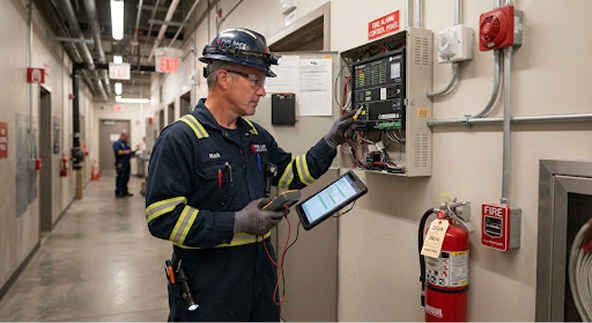
NFPA Certified Designs
Global Standard Safety Protocols
Engineered System Types
Tailored architectures for specific infrastructure needs.
01
Addressable Systems
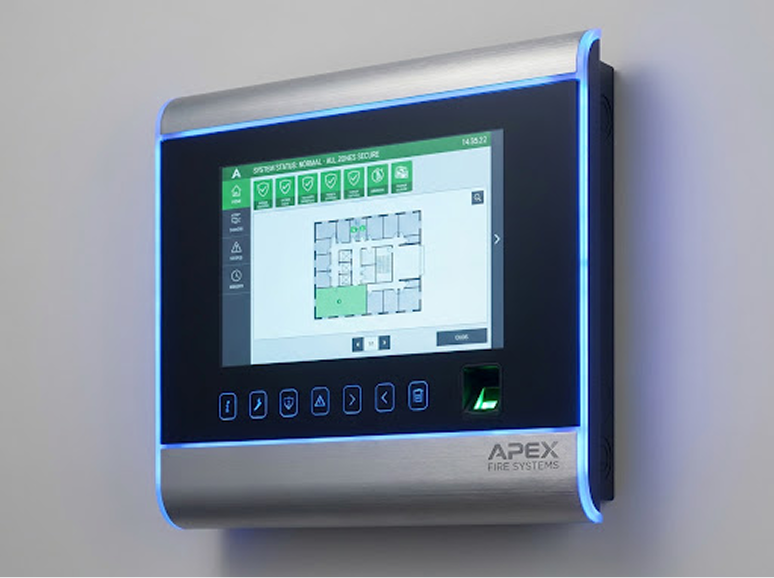
The gold standard for large-scale infrastructure. Each device has a unique address, allowing the control panel to pinpoint the exact location of a fire or fault, drastically reducing reaction time.
- Pinpoint accuracy for detectors
- Loop circuitry for redundancy
- Advanced maintenance alerts
02
Conventional Systems
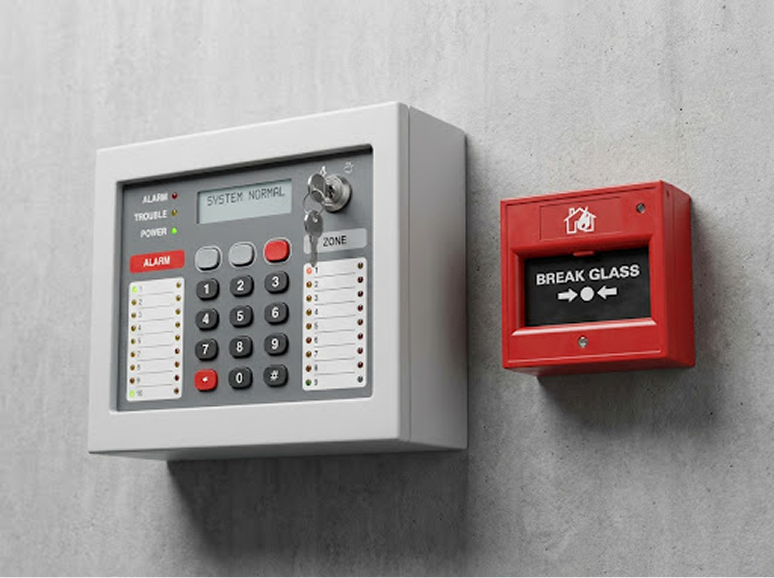
Ideal for localized facilities. Cost-effective zone-based detection that divides your property into manageable areas for rapid response without compromising on core reliability.
- Zone-based fault localization
- Simplified robust cabling structure
Advanced Detection Devices
Precision engineering for early fire signature identification.
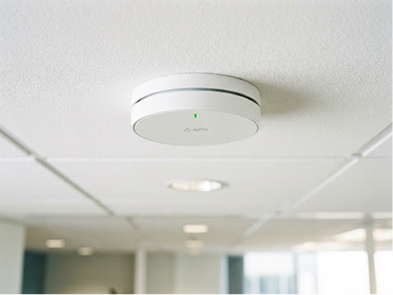
Smoke Detectors
Sense smoke particles in the air; used in offices, corridors, and rooms where early smoke detection is critical.
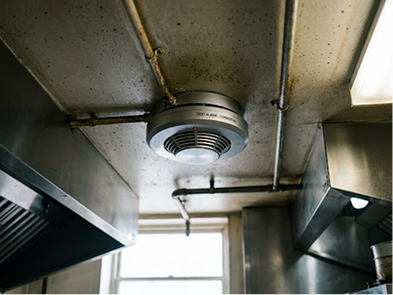
Heat Detectors
Trigger on rapid temperature rise or a fixed threshold; ideal for kitchens, garages, and dusty areas where smoke detectors would give false alarms.
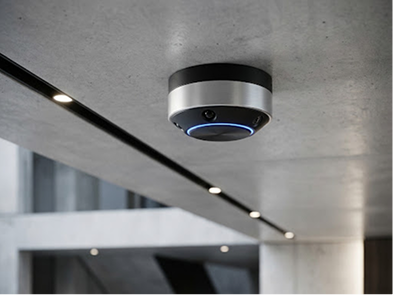
Multi-sensor Detectors
Combine smoke and heat sensing for more reliable detection with fewer false alarms.
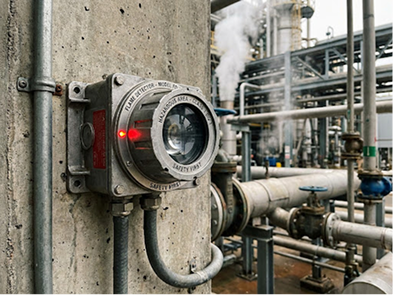
Flame Detectors
Detect UV/IR radiation from open flames; used in high-risk areas like fuel storage or industrial plants.
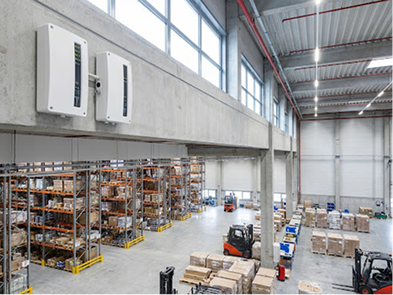
Beam Detectors
Project an infrared beam across large open spaces (warehouses, atriums) to detect smoke interrupting the beam.
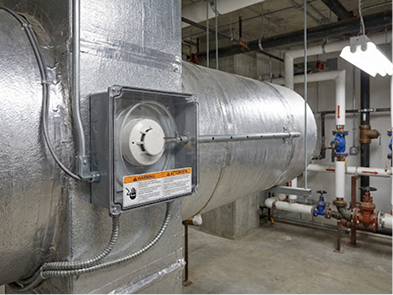
Duct Detectors
Installed inside HVAC ducts to detect smoke circulating through the air handling system and shut it down automatically.
'SAFETY-FIRST' FRAMEWORK
Compliance as a Standard
We don't just install hardware; we ensure your facility meets all compliances required by local Fire Department. We also ensure they required unification through seamless systems integration with existing infrastructure.

Sprinkler Integration

PA & Evacuation

Local Fire Norms

Certification Support

Full Lifecycle Support
Comprehensive/Non-Comprehensive AMC
Quarterly/Monthly System Maintenance
Breakdown Repair Services
Technical Capabilities
Feature-rich systems designed for reliability.

Multi-Sensor Detection
Advanced optical smoke, rate- of-rise heat, and multi-criteria sensors for false-alarm reduction.

Real-time Alerts
Instant notification on control panels with graphical floor plans and LCD readouts.

BMS Integration
Seamless handshake with Building Management Systems for automated HVAC shutdown and access control release.

Remote Monitoring
Mobile app connectivity and fail-safe mechanisms ensuring you are always in the loop, 24/7.
Precision Execution
A structured methodology that ensures reliability from blueprint to maintenance.
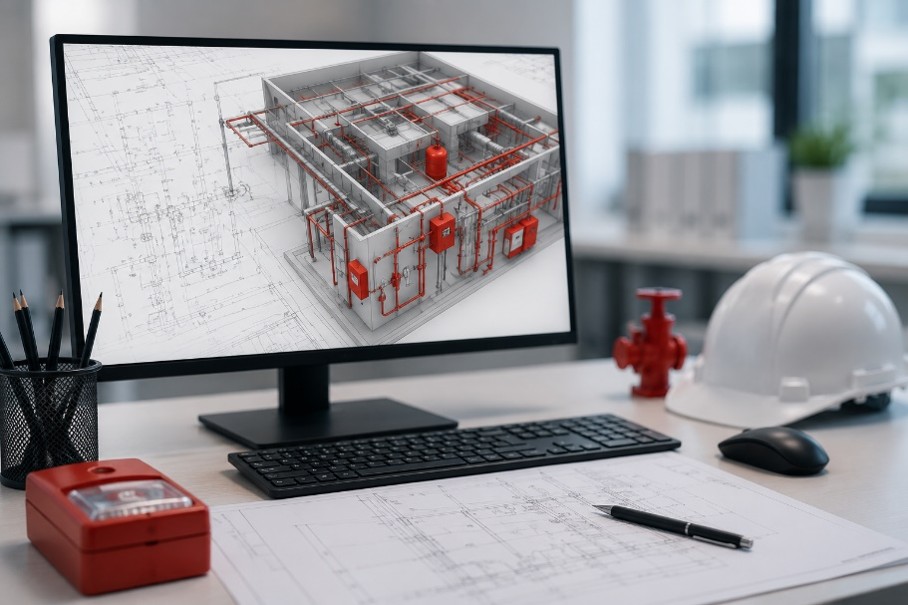
1
Design & Engineering
Strategic planning and system architecture.
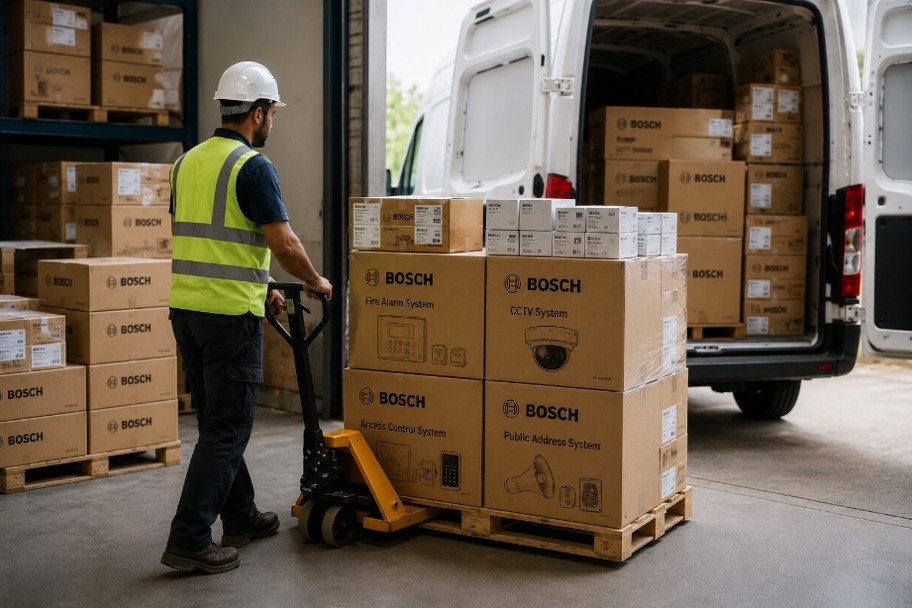
2
Supply
Procurement of premium certified components.
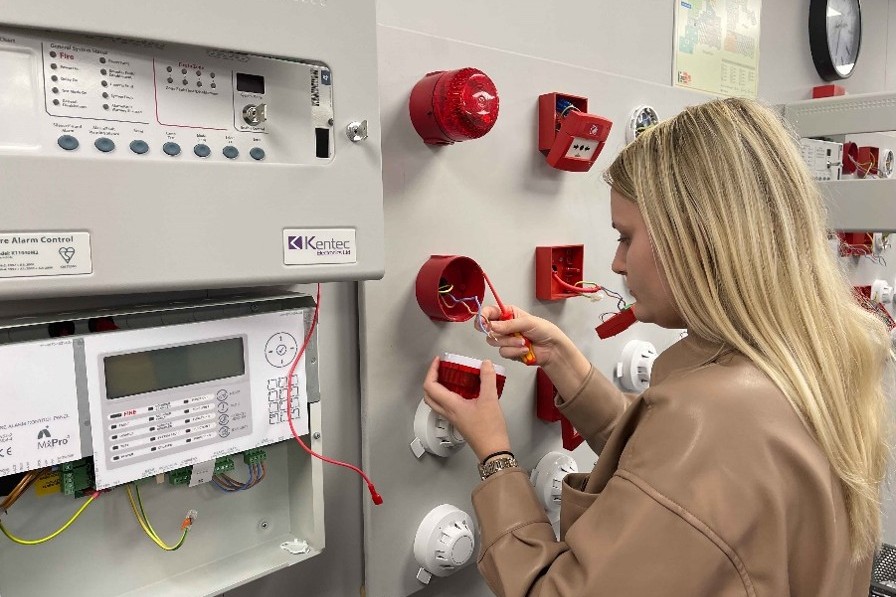
3
Installation
Professional on-site technical deployment.

4
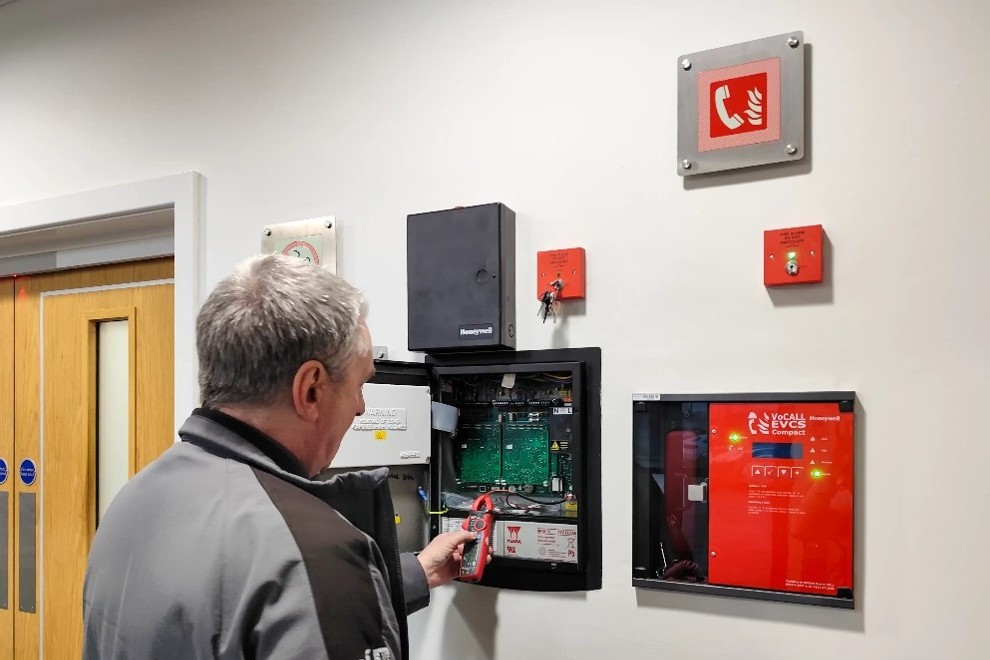
Commissioning &
Handover
Final handover and operational activation.
5
AMC & Support
Long-term maintenance and technical assistance.
Industries We Protect

Logistics & Warehousing

Healthcare
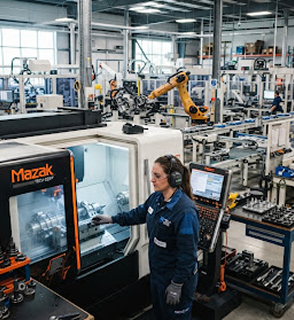
Manufacturing

Corporate
Why Vaibhav Tech?
We bring decades of engineering expertise to fire safety. Our systems are not just installed; they are designed, validated, and maintained for zero-compromise safety.

Expert Installation
Certified technicians ensuring neat, compliant cabling and device mounting.

Quick Response Time
24/7 support team ready to dispatch for critical system faults.

Genuine Spare Parts
Direct partnerships with OEMs for authentic replacements and longevity.
Help us to connect with you
Get a free consultation and site survey estimate.
Frequently Asked Questions
A fire alarm system detects signs of fire such as smoke or heat and alerts people through audible and visual alarms. It can use smoke detectors, heat detectors, manual call points and a central fire alarm control panel.
The two commonly used types are conventional fire alarm systems and addressable fire alarm systems. The right choice depends on the building size, layout, risk level and monitoring requirements.
The number of cameras depends on the size and layout of the property. A small home may need 2–4 cameras, while offices, shops, warehouses, and larger properties may require more cameras to eliminate blind spots.
A conventional system identifies the affected zone, while an addressable system can identify the specific detector or device that has been activated. Addressable systems are particularly useful for large commercial and industrial buildings.
Fire alarm systems are used in offices, factories, manufacturing plants, hospitals, warehouses, IT parks, commercial buildings, government facilities and other locations where early fire detection is important.
A typical system may include smoke detectors, heat detectors, manual call points, fire alarm control panels, sounders, visual indicators and other notification devices. vaibhav tech solutions
It provides early warning, helping occupants respond quickly to a potential fire and supporting emergency evacuation and safety procedures. It can also help protect buildings, equipment and other valuable assets.
Fire alarm systems should be periodically inspected, tested and maintained to ensure that detectors, alarms, control panels and other components remain operational. Maintenance requirements should follow applicable standards, manufacturer recommendations and the building's fire-safety requirements.
False alarms can occur due to environmental conditions, dust, unsuitable detector placement, electrical issues, maintenance problems or other factors. Proper detector selection, installation and regular maintenance can help reduce unwanted alarms. aerb.gov.in
Yes. Fire alarm systems can be integrated with other building systems such as public address, building management and emergency-response systems, depending on the system design and requirements.
The cost depends on factors such as building size, number of detectors and alarm devices, system type, wiring, control panels, installation requirements and the level of integration required. A site assessment is recommended for an accurate quotation.
Professional design and installation help ensure that detectors and alarm devices are appropriately selected and positioned and that the system is properly tested and commissioned. Vaibhav Tech Solutions provides fire alarm system design, installation and maintenance services for commercial and industrial applications.